
Skip to content
logo TNQ
  • Read
    • Dispatches
    • Issues
    • Online Exclusives
    • Under Review
    • Free Archive
      • Poetry
      • Fiction
      • Nonfiction
  • TNQ Presents
    • Wild Writers Literary Festival
    • Writing on the Land: A Wild Writers Retreat
    • The Vestige and TNQ Story
    • Spirit Ink
    • The X-Page Workshop
    • Parallel Careers
  • Subscribe
    • Print Magazine
    • Digital Edition
    • Free Archive
  • Submit
    • Contests
    • Regular Submissions
  • Donate
  • Buy
    • Where to Buy
  • My Account
  • About TNQ
  • Our Team
  • Contact Us
Login
$0.00 0 Cart

Finding the Form with Jannie Edwards

By Jannie Edwards

On Writing “All-Night Mirror: Notes Toward an Elegy”

After my older sister died and I went to Wales to help my nieces arrange to bring her body back from Turkish Cyprus, plan her funeral (or in her terms, a FUN-eral) and sort through her chaotic affairs, we discovered in her papers that she wanted a a green burial. Natural burials were relatively inaccessible in Canada in 2010 but easily enough arranged in Wales. We contracted to bury my sister in a beautiful rolling field in West Wales that did not allow any memorial gravestones or even flowers. From a map, we picked and paid for a plot, then fixed a date to bury the natural casket (wicker, no glue or nails). As I recall, the closer to the huge, ivy-covered Sycamore trees, the more expensive the real estate.

Back home in Alberta, I decided I wanted to research the state of natural burials in Canada and write a feature article. I contacted a journalist friend for a coffee consultation and during our meandering conversation she plumbed me for details about my complex relationship with my charismatic, troubled sister. When my friend asked why I wasn’t writing about this, I broke down in tears: “You wouldn’t believe how many times over decades I’ve tried and failed.”

My friend then gifted me with the most productive writing advice I have ever received. She told me to go away on my own for at least four days, somewhere isolated with no distractions, to take a stack of index cards and to just write whatever came: words, scenes, anecdotes, memories. She warned me to resist any attempts to arrange the cards too soon.

That was the charm. The process of spillage shaped the essay’s incremental non-linear form as – what? Collage? Bricolage? Quilt? A musical friend suggested the metaphor of fugue, a polyphonic, multi-themed composition but that seems a stretch as the voice is mine throughout. Whatever the most apt metaphor, the form felt organic, invitational, open to rearrangement. It felt like a natural transition from writing poetry to writing prose.
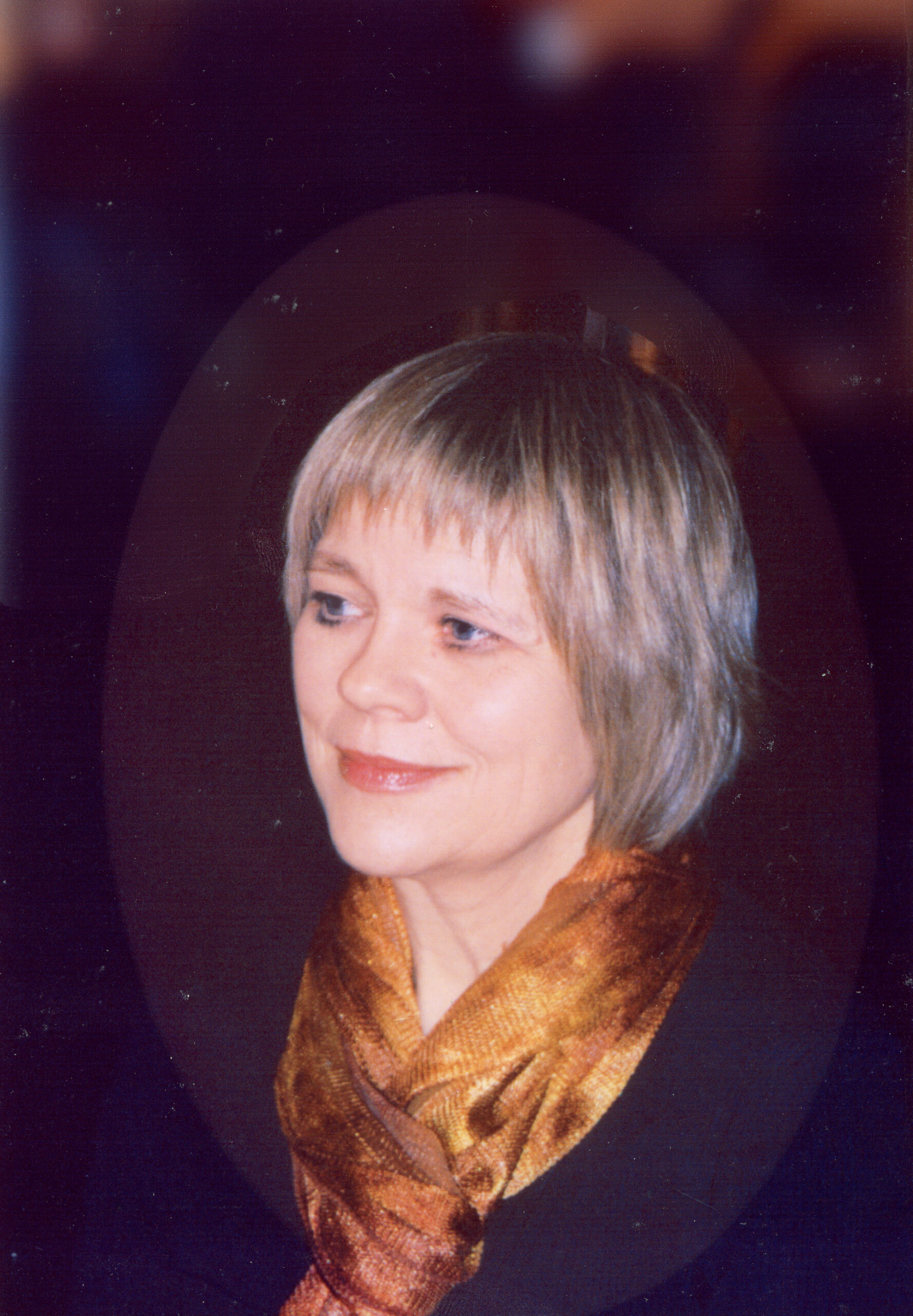
Photo of the author, Jannie Edwards. Against a black backdrop, she is wearing a black top and a golden scarf, and her blond hair sits at her shoulders.

Jannie Edwards is a writer, editor, teacher and artistic collaborator who lives in her chosen city of Edmonton/Amiskwacîwâskahikan where the magpies and coyotes are becoming more bold.

Link

Photo by Nathan Bang on Unsplash.

Read more

  • Jannie Edwards
  • Finding the Form
  • Writer Resources

Post navigation

Ringing Changes: Steven Heighton on Sound and Sensibility
Mariam Pirbhai’s Writing Space

Territorial Acknowledgement

The New Quarterly is based in Waterloo, Ontario, on the traditional territory of the Haudenosaunee, Anishinaabeg, and Neutral Peoples. We acknowledge that this land is part of the Haldimand Tract, the land promised to the Six Nations of the Grand River as part of the Haldimand Proclamation of 1784.

As a literary magazine devoted to storytelling, we recognize that stories have long been a way of knowing, preserving, and sharing in Indigenous cultures. We honour the generations of First Nations, Métis, and Inuit peoples who have cared for these lands and continue to do so. We commit to listening, learning, and amplifying Indigenous voices, and to supporting pathways for truth and reconciliation through the stories we publish.

Facebook-f Instagram Linkedin-in Tiktok X-twitter
  • Privacy Policy
  • Accessibilty

MAGAZINE

  • About
  • Our Team
  • Where to Buy

CONTRIBUTE

  • Submit
  • Volunteer
  • Our Board
  • Donate

CONNECT

  • Contact Us
  • Newsletter

Subscribe to our Newsletter

CONNECT