
What is Lynda Williams Reading?
By Lynda Williams
What I’m reading is never quite as interesting as what I’m rereading, mostly because I read too fast and until I’ve read a book twice I don’t have anything remarkable to say about it. Also, what I’m rereading is generally tied to what I’m currently writing and wrestling with on the page. At the moment this includes how to create a novella that is more than a short story with too many words and how to write sex scenes that don’t feel icky.
Sarah L. Pratt’s They’re All Named Poppy (Radical Bookshop and Press) is an instruction manual for both. In the space of a cool 90 pages, Pratt delivers a tender and offbeat love story featuring an older woman and younger man (sans ick), while deftly handling themes of identity, belonging, and the opioid crisis. A full length novel could easily fail where this slim volume succeeds. The pacing is perfect, never rushed, the dialogue crackles with tension and wit, and the sex is sexy. Compression is my jam, and what Pratt does with it is both breathtaking and badass.
Another book I’m rereading is Aviva Rubin WHITE (re:books). It deserves to be read more than once based on the weight of the themes alone—racism, bigotry, anti-semitism, homophobia. It’s a great book club pick because once you’ve read it, you’ll need someone to discuss it with, but for me, Sarah Cartell, the protagonist, is a major draw to revisit the novel. She is messy and complicated and funny and the antithesis of all things likable (my favorite kind of character). I love it when good intentions lead characters to make bad choices—it’s not just the road to hell that’s paved with good intentions, it’s also the road to good literature.
Sarah’s upbringing in a white supremacist family is unravelled by her friendship with the town librarian who introduces her to books that make her world bigger. Unfortunately, Sarah’s plan to dismantle the network of hate groups in Canada by infiltrating one has dire and violent consequences that leave Sarah to reckon with herself and her family’s past during a stay at a psychiatric institution. Much of the novel unfolds through Sarah’s regular sessions with her therapist, Mona. As someone who spent too much of early adulthood talking to therapists I didn’t fully trust, the details of these interactions—especially Mona’s messy eating habits and crumbs—sparkle with a vivid, true to life quality that had me at turns smiling and squirming. Rubin’s dialogue is crisp and often funny, and I found myself invested in her characters in a way that haunted me after I’d finished the book, which is why I went back to it. I was so disturbed by Sarah’s family that I had to stop reading early on because I was afraid of what would happen when they discovered she had a black boyfriend. How writers compel us to keep reading is a fascinating question, but how a writer can make you care so much you’re afraid to go on is a question I’ve never had to ask myself before. What I feared didn’t come to pass, but Rubin’s ability to create such an unbearable level of fear within in me is something I’ll be contemplating for a long time.
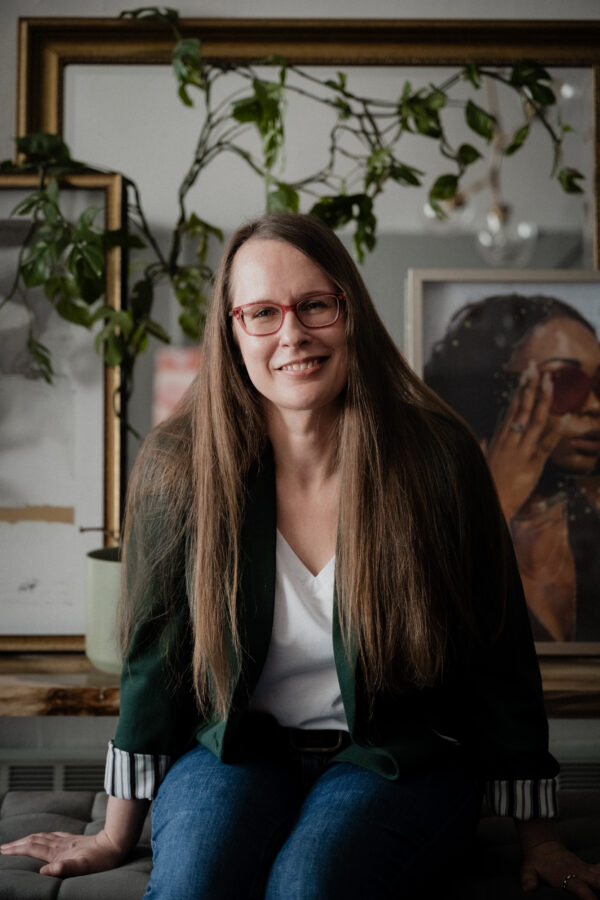
Lynda Williams’ stories have appeared in Grain, The Humber Literary Review, and The New Quarterly, among others. She holds a graduate certificate in Creative Writing from the Humber School for Writers and is a recipient of the Lieutenant Governor of Alberta Emerging Artist Award. Her debut collection of stories, The Beauty and the Hell of It, is forthcoming from Guernica Editions in September 2025 and is available for preorder now.
Photo courtesy of Blaz Photo.