
What is Rob Taylor Reading?
My favourite book of 2025 was Otoniya J Okot Bitek’s We, the Kindling. An account of the brutality of the Lord’s Resistance Army in northern Uganda, the book’s stories are drawn directly from women who survived abduction and involuntary servitude. Many others did not.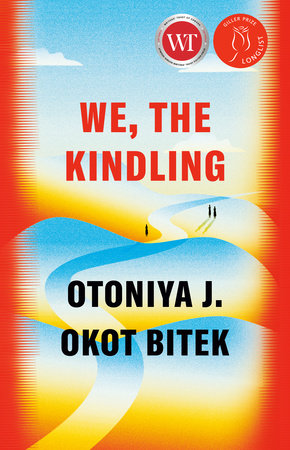
Published as a novel by Alchemy (an imprint of Knopf Canada), the book can perhaps be better described as a gathering of first-hand accounts, folk tales, flash fiction vignettes and prose poems (Okot Bitek assembled the book slowly over 15+ years). It’s hard to suggest a book released by Knopf, which was named a finalist for the Atwood Gibson Writers’ Trust Fiction Prize and longlisted for the Giller, has been “overlooked,” but I do believe We, the Kindling hasn’t received the attention it deserves—it’s that harrowing and haunting and good. I suspect the reason for this is the form: a poet barely hiding their allegiance to lyricism, leaving disappointed those who come to a novel wanting a tidy narrative of cause-and-effect. But here there is no straight line, no centre. The book’s characters, and their stories, reveal themselves and retreat (some returning later in the book, some not) resisting our insistence that they line up single file. In other words, the book works like our memories, not like what we do to our memories in order make sense of them. Reading this book feels like stepping into the swirling collective memory of the Acholi people.
Reading We, the Kindling reminded me of Jan Zwicky’s thoughts on narrative and atrocity in her essay “Lyric, Narrative, Memory” in A Ragged Pen: Essays on Poetry and Memory:
To historicize atrocity, to turn memory of it into a story, is to insist that sense can be made of it, that it can be located in a causal order, and that by so locating it, we can come to terms with it… But this is not true. What makes atrocity atrocity is that it is outside the reach of acceptable causal stories. There is no sane ethos that can embrace it. Its memory, then, can not be documented morally in narrative. Moral treatment of atrocity requires a lyric medium, witness rather than explanation. (W.G. Sebald.)
We, the Kindling offers us the lyric witnessing of atrocity. It’s not easy to receive, and is made all the more challenging by the book’s rejection of the causal comforts of a traditional narrative account (the inexplicable explained). It’s not what every reader is looking for when they pick up a novel. But, at least some of the time, on some subjects, it should be. I’m so grateful for this book, both what it says and how it says it, and the path it opens for others to do the same.