
Finding the Form with Beth Kaplan
By Beth Kaplan
For decades, I’d wanted to write an essay about my visit with the famous artist Alice Neel, who painted a portrait of my father in 1949.
I knew my parents had been friendly with Neel and her lefty gang in New York in the late forties, though had no idea to what degree. Going through stacks of old letters left by my mother after her death in 2012, I found one from Sam Brody, Alice Neel’s lover and father of one of her sons; it was full of affection for my parents from both Alice and Sam. It made me proud to realize their bond had been much closer than I’d realized.
When the Metropolitan Museum in New York opened a huge retrospective of Alice Neel’s work in the spring of 2021, bringing her life and portraits much-deserved world attention, I realized this would be the perfect time for the article.
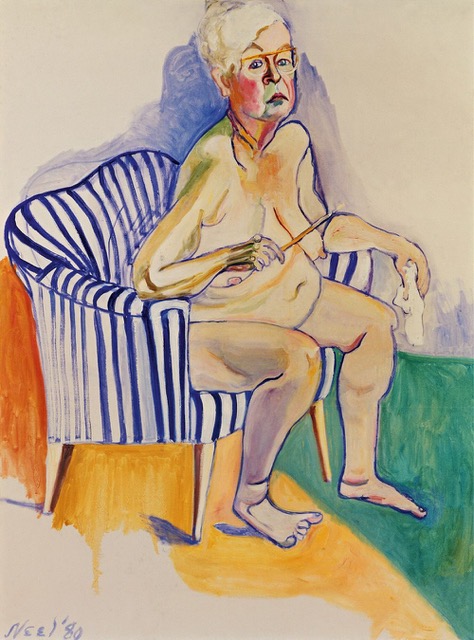
But there was a huge problem: my visit with Alice had been forty-one years before, in the winter of 1980. My memory of most of the specifics of our encounter was dim, though I could remember a few things clearly, especially the moment when she erupted in anger at me. I emailed my ex-husband, who’d been with me on the visit, asking, “What do you remember about our time with Alice?”
He replied, “Just that at one point she was really hard on you.”
I needed more than that.
And then I remembered that right after returning to Vancouver from New York, I’d written a long poem about meeting Alice and submitted it to CBC radio’s Anthology, which bought it and hired me to read it. I dug out the poem and was thrilled that it included details and chunks of dialogue I could use almost verbatim in the essay.
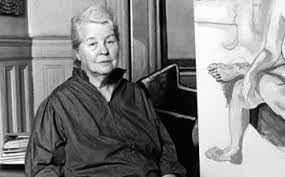
To fill in other blanks in my memory, I turned to the internet, where I found articles about Alice and a documentary of her being interviewed in her apartment; they helped me bring back the place, her voice, her manner. How had I reached her, I wondered, by letter, by phone? I suspected Dad must have given me contact information. Again luckily, I have kept a stack of old address books, and after flipping through a dozen, located the one from the early eighties. Inside, I found Alice Neel’s phone number and address. I remembered how proud I was to print that name and number in my book.
The essay wouldn’t exist if I hadn’t jotted detailed notes after the visit. I should do so more often now.
→ Beth Kaplan’s memoir, Loose Woman: my odyssey from lost to found, is a finalist for the Whistler Independent Book Award. She’s the author of three previous books and has taught nonfiction writing at Ryerson and U of T. bethkaplan.ca.
Photo by Diogo Fagundes on Unsplash