
Finding the Form with Nash Lott
By Nash Lott
It matters that I explain how I think about form before speaking to how I got there with “Polling Station”, or how I may approach it with other poems.
I acknowledge that form, in its most basic definition, tends to mean the “shape” of the words on the page; if one sticks to a textualist reading of “form”, as per The Poetry Archive website,
“Form, in poetry, can be understood as the physical structure of the poem: the length of the lines, their rhythms, their system of rhymes and repetition”.
In my expanded definition, I tend to include other “textural” aspects of the written word such as tone, punctuation, syntax, tense, point of view (first person, third person, etc.). In my head, these aren’t simple adornments. They feel essential to form—as in, we choose the shape, or form, to imbue the visual of the poem with that which is also expressed, or enhanced, by the other “textural” parts of the written word. They are not, in my thinking, mutually exclusive.
Much as the skeletal structure of the mammal is the underlying “form”, its skin, hair, movement, sound and manner are what animate it. Form is what you hang the poem on; it only resonates if it’s harmonious with that which is draped upon it.
“Specific to “Polling Station”, the form was a natural evolution. I’d taken inspiration from a line in Sue Goyette’s “Ocean”, but also felt the call of other inherent qualities of the poem. I felt there were three essential attributes of Sue’s work I wanted to carry forward, as a nod to her inspired writing.”
First, Sue’s stunningly beautiful line, “Love is like that, it knocks on doors and urges you to vote”, was the catalyst for me to write about complicated political times, in a manner filled less with the rage percolating in me (due to my unrelenting political dismay), and more from a place of compassion for our shortcomings and a resolve to work diligently—collectively—for change.
Secondly, the use of couplets clearly mirrors the structure of “Ocean”. Unintentionally, but providentially, the couplets end up reflecting the sense of disparate parts coming together as a more powerful collective. “Polling Station” is also semi-dense; the use of couplets allows sufficient space for the words and ideas to breathe.
Finally, the use of We, the collective. I chose to use We in “Polling Station” to engender the idea of a support-rich environment, societally, thus emboldening a collective call to action.
As an artist who works mostly with metal, spatial relations come easily to me in the object world. This can translate into an asset for pattern recognition when writing: double meanings, homophones, alliteration, similarity in concepts, metaphors, etc. These aspects of poetry, if accounted for, help me inform form.
None of this is to say I have any of it “figured out”. It’s just one more aspect of poetry I continue to work on.
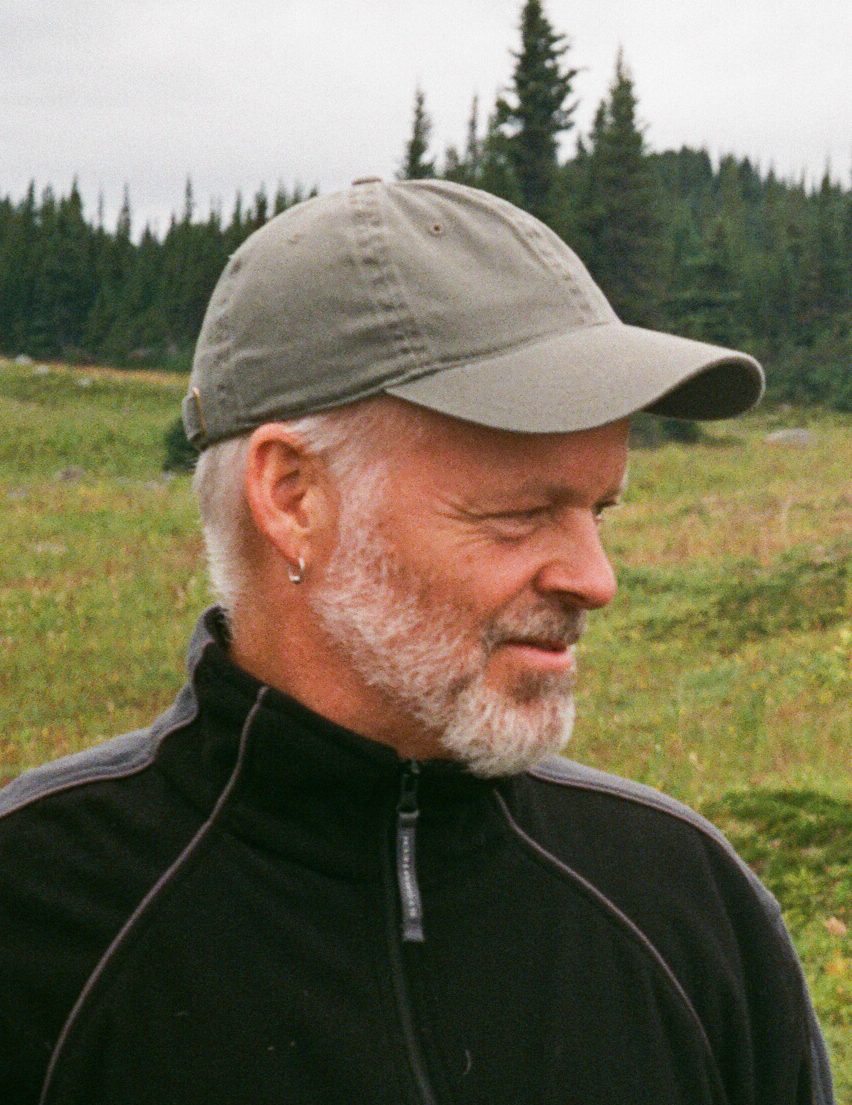
Nash Lott is an artist blacksmith. His work includes a collaborative sculpture installed at the University of Calgary’s Taylor Digital Library. Social justice, mental health, nonhuman animals and nature inform his life and poetry. As a neurodivergent writer, late-in-life diagnoses of autism and ADHD have helped put his complex experience into perspective. Autism intensifies his relationship with the sounds and textures of language. Nash lives near the Rocky Mountains with his wife, Patti, also a poet. After achieving world peace, he’d love to find a small cabin by a lake in the woods. He’s not expecting the cabin anytime soon.
Photo by Nicolas Messifet on Unsplash