What Is Scott Randall Reading?
By Scott Randall
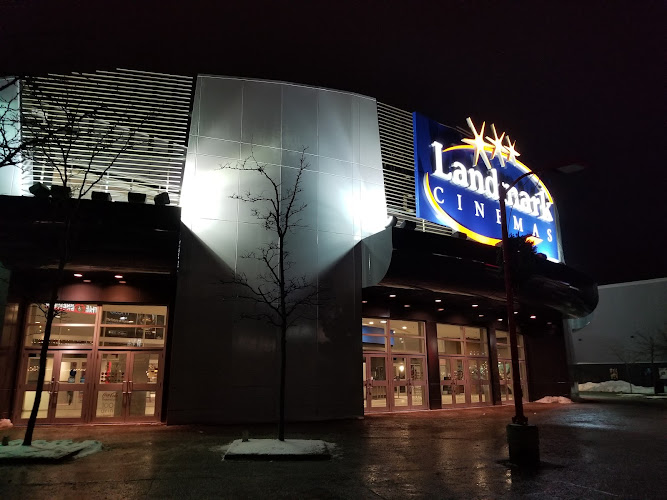
Some time last fall, my officemate-turned-movie-companion-turned-dear-friend Marco and I were meeting at the Kanata Landmark for a matinee. We see a lot of movies, and so I can’t
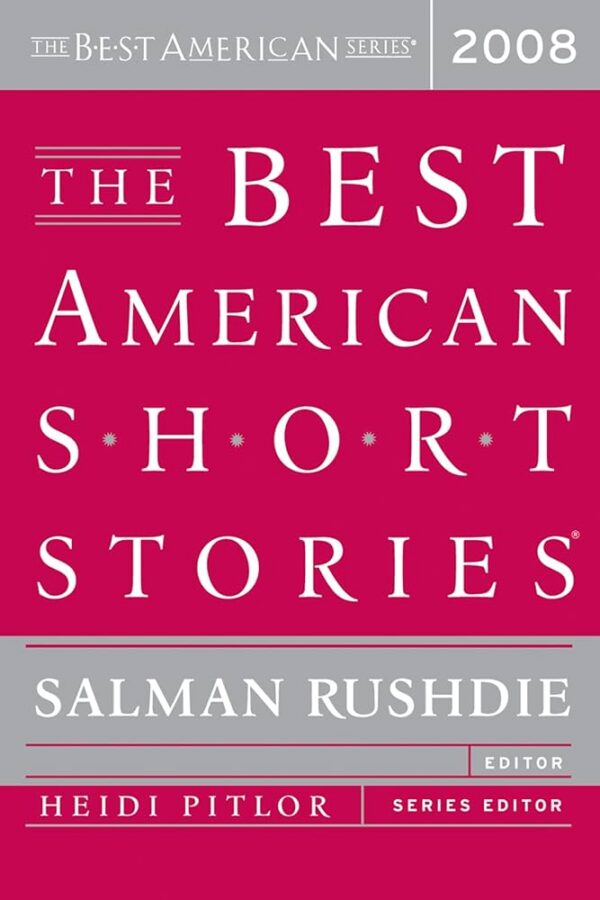
remember which it was, but I arrived early and wound up book browsing in a Value Village. I had no luck in the metal shelves of trade paperback fiction, but I found the 2008 BASS anthology incorrectly categorized in nonfiction. The book stood out; the series reuses its cover design and font from year to year, and for decades, the only annual change was its two-tone colour scheme. The 2008 edition was silver typeface on a burgundy background, and while seventeen years old at this point in time, it appeared unread. Pristine spine. Clean matte finish. $5.99.
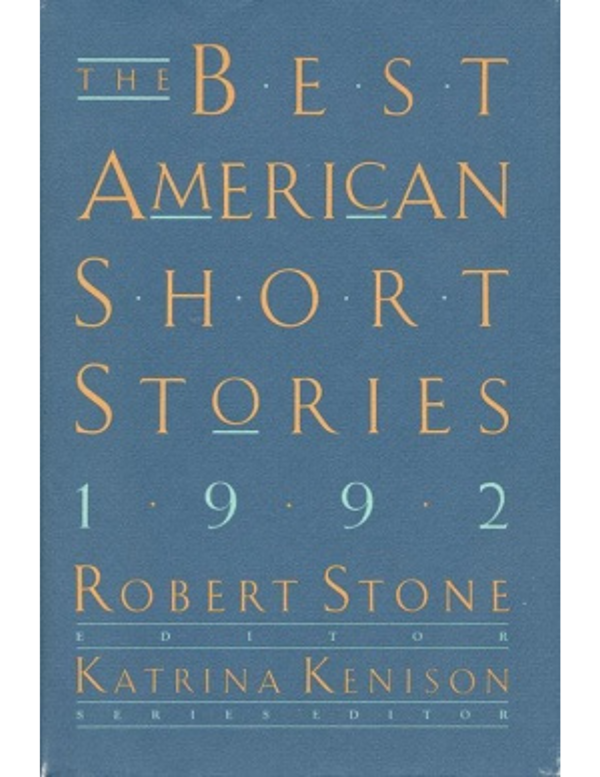
Thirty-four years ago, Dr. Russell Brown assigned the 1992 The Best American Short Stories (series editor Katerina Kenison and guest editor Robert Stone) as required reading in my third-year Creative Writing course. That year’s edition contained stories by Amy Bloom, Denis Johnson, and Lorrie Moore, none of whom I knew at twenty-two years old, but I adored their stories and tracked down their most recent books. After that, I tracked down their backlists, and I still look out for their new releases today. For a while, I was enamoured with a few other authors in that edition – Robert Olen Butler, Thom Jones, David Foster Wallace, but – as will happen and for whatever reason – my enthusiasm waned over time.
My interest in the yearly anthologies continued nonetheless; they’re an efficient way to discover and collect new writers, and at some point, in my early thirties, I even daydreamed about accumulating and reading every edition of my lifetime. 1970 to 20??. In addition to the stories, each edition contains contributors’ notes – bios and sundry anecdotes that explain the impetus for a story or the biographical traces to be found in a story or the story’s origins as a chapter in a failed novel. I enjoy them all. The notes may be unnecessary – writers-writing-about-writing – but then again, I imagine everyone who bothers to read them is a writer at some stage of their development – aspiring, emerging, established, stillborn, dying on the vine, gone to seed. (I’m never sure where I fit in on that spectrum. Depends on the day). Anyway, I eventually gave up my completist and acquisitive ambition to find and read every edition since 1970, but I still snatch up old copies of BASS when I stumble across them in second-hand bookshops and library sales.
Often, guest editors in their introductions struggle to find a unifying themes amongst the disparate stories, and most admit the struggle is unwise. Each anthology contains too many different writers of too many different ages and backgrounds and stages of their career, so most of the guest editors simply celebrate the variety. Since I buy my copies used and years after the fact, however, they’re time capsules, and like all time capsules, they have clear overriding themes: The passage of years and decades and aging and atrophy. Fate and providence. Randomness. Random reversals of fortune. Reading through an outdated edition of The Best American Short Stories can evoke more wistfulness and rumination than a high school
yearbook.
At fifty-five years old, I’m of course a different reader than I was at twenty-two. I bring more education and trivia and reading to my reading, and my used seventeen-year-old copy of 2008 BASS contains writers I know well. TC Boyle, Allegra Goodman, AM Homes, Jonathan Lethem, Karen Russell, George Saunders. In many cases, I’ve read their 2008 stories previously – either in their original magazine publication or in the authors’ own collections (in a few cases, both and in these cases, I can give myself an extra pat on the back). 2008 BASS also contains a few writers who I know now in 2026 but would not have known in 2008. Rebecca Makkai, Daniyal Mueenuddin, and Steven Millhauser. I probably knew of Millhauser but hadn’t yet read him. Geez – I would’ve been thirty-eight then. How hadn’t I read him before 2008? I should have done, and I’m disappointed in my past self. My past ignorance also makes me realize that used copies of BASS might be time machines as well as time capsules.
In 2008, I relocated to Ottawa. In 2008, my partner-wife-spouse Ke and I purchased our first house. In 2008, my dream teaching job in Montreal was ending, and I started the disheartening teaching job at the poorly run school where I still work. My kid Olly was celebrating his first birthday. My in-laws lived with us for three months. In all, I’d have to say 2008 was bittersweet, but then, perhaps most years are bittersweet when viewed through the telescope of time.
The two names in the 2008 BASS that bring me the most melancholy are also the two names that also appeared in the 1992 BASS. Tobias Wolff and Alice Munro. Wolff’s, “Bible,” was retitled “A White Bible” and included in Our Story Begins: New and Selected Stories, which also came out in 2008. Shortly after or before BASS? I don’t know. He hasn’t had a new book since then. At his age, the absence is understandable, but it still makes me sad. He will turn eighty-one later this year, and he may well not put out another book at all. Munro’s story is “Child’s Play,” from The New Yorker and later included in Too Much Happiness. Her name was a staple of the anthology for decades, and in 2008, she was still actively putting out work. This would’ve been years before her retirement, before her Nobel, before her dementia, before her death, before her disgrace.
What saddens me the most about reading the anthology, though, is the guest editor Salman Rushdie’s author photo on the back cover. His goatee has turned grey and he’s gone mostly bald, but he’s still got some black hair on the sides and near the back. He wears a wide grin and looks rightly pleased with himself. His face is whole and both eyes are looking at the camera. The photograph almost convinces me that this world is nothing but rot, but then, I have friends and family and reading to remind me I’m wrong.
Scott Randall‘s third story collection, And to Say Hello (DC Books, 2015), won the Ottawa Book Award, and his most recent work is the novel An Unruly Little Animal (DC Books, 2023)