
What’s Anna Elgie Reading?
By Anna Elgie
I’m a big re-reader because as we read, our brains are busy imagining and getting side-tracked, and I know I miss something I catch on the second round, and more on the third. This might not always be a detail but a larger insight on the human experience. The magic of reading is in not realizing when you make the shift from reading to immersion. Even better is when you experience a state of being that the author creates without your knowing how you got there.
I feel that way when I read anything by Claire Keegan, but lately I’ve been re-visiting ‘So Late in the Day: stories of women and men.’ In it, she recounts her experience staying at a writing retreat that was once the home of writer Heinrich Böll. The stories in this collection tap into a ‘too little too late’ state of unease and serve as a reminder that there are those who mean us harm, or at the very least are comfortable with our discomfort.
I found Heinrich Boll by wandering the stacks at my local library twenty years ago. (Browsing at libraries is generally life-changing.) I read ‘The Silent Angel’ and was floored by the simple way he hit me with such tender, heavy emotion. How do you rebuild a life after everything you’ve known has been decimated by war? This is my third time reading it. I’m searching for how he keeps the tension when the outlook for his character is so bleak.
A book came in the mail last week: ’Women among Monuments: solitude, permission, and the pursuit of female genius’ by Kasia Van Schaik. I have no memory of ordering it (bit scary), but I must have read about it on Instagram and ordered it on the spot. It explores the conditions that must be right for a woman to delve into her artistic genius. A room of one’s own doesn’t cut it. I’ve only just begun, but the text immediately raised the question of why most of the statues erected throughout history have been of men. New statues are also predominantly of men. This will be an unrelenting read.
I read as much nonfiction as fiction, and I’ve been particularly focused on the history of women’s civil rights in Canada, and those of our marginalized peoples whose rights were rolled out at a bizarrely slow pace. UBC Press has a terrific series called ‘Women’s Suffrage and the Struggle for Democracy.’ I’ve read every title and own several.
Any book touching on the history of private/domestic life is my jam, like Elinor Cleghorn’s ‘Unwell Women: a journey through medicine and myth in a man-made world’ and her latest ‘Woman’s Work: reclaiming the radical history of mothering.’ This has been a great resource in writing my historical fiction.
I read these books because it’s important to understand our history, to know the great-grandmothers whose shoulders we stand on, and to be reminded of the courage it’s taken to stand up to the men who hate and despise us simply because we’re female. But most of all, we can be brave too. To adapt the great line by Anthony Hopkin’s character in the movie ‘The Edge’: “What one woman has done, so can another.”
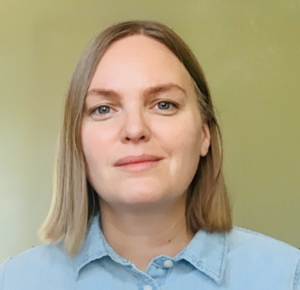
Anna Elgie (she/her) lives and writes in Calgary, Alberta. She is the 2024 winner of the Brenda Strathern award, and is writing a novel of historical Canadian fiction. Her published works may be read on annaelgie.com.