
What’s Nicole Boyce Reading?
By Nicole Boyce
I’ve been reading a lot of commercial fiction lately, and I often try to have two books on the go: a commercial fiction title (usually a rom-com) and a nonfiction title (usually a memoir).
Recently, I read Passion Project by London Sperry and A Truce That Is Not Peace by Miriam Toews. In many ways, these are two very different books. One is a heart-wrenching literary memoir about loss, love, and the question “why I write.” The other is a joke-laden romance full of Mamma Mia! references and delightful tropes.
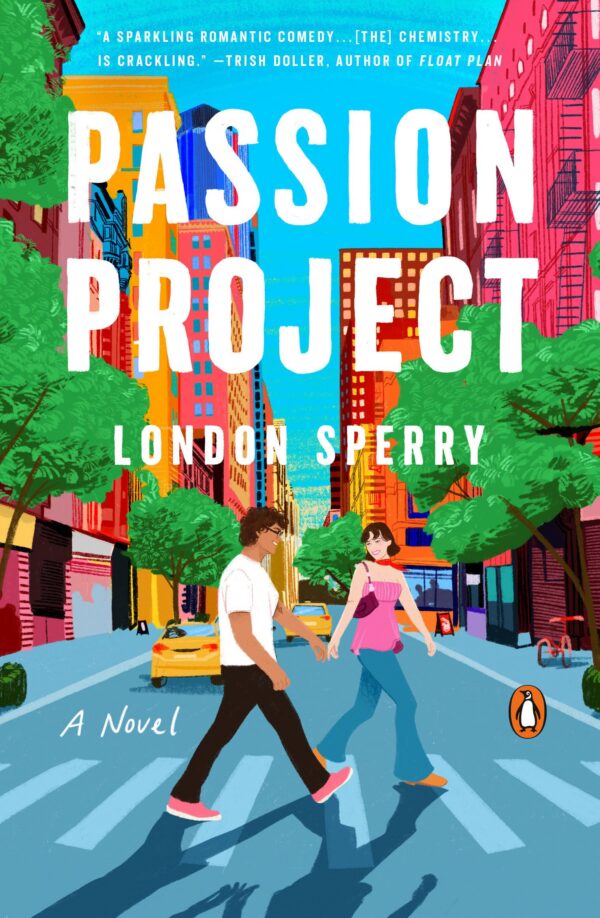
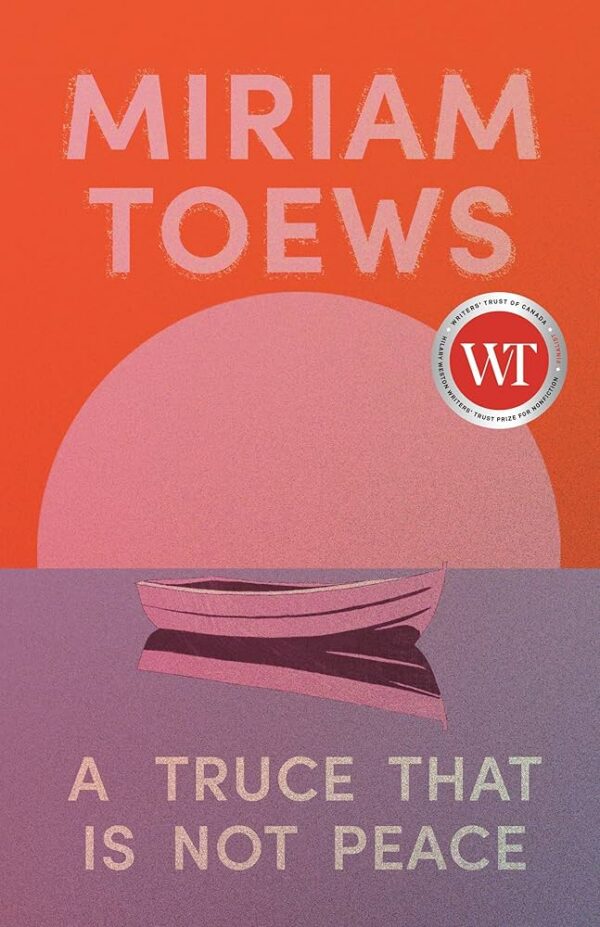
As I read the two books, though, I thought a lot about the areas where they overlapped. Here are my musings:
- Themes
Both books deal with themes of love and grief. Toews’ memoir artfully combs through the writer’s history, piecing together how her love and grief for her sister and father—each of whom died by suicide—have shaped her life and her work. In Sperry’s book, the protagonist, Bennet, navigates grief over her ex-boyfriend’s death, for which she feels responsible. It was interesting to see how each book, in its own voice and genre, explored the complexity of grief: how it can ripple through years and experiences, shaping a person’s path in unexpected ways.
Each book also dealt with the question of vocation. Toews’ book is structured around a question—“Why do you write?”—that she was asked to answer in advance of a literary event. To explore the question, Toews picks apart the personal and professional factors behind her drive her to create—and the fruits and costs of this creation. In Sperry’s book, the romantic leads set out to discover Bennet’s “passion,” trying out skyscraper-climbing, tattooing, and more as Bennet tries to find out what (amidst her struggles with grief and depression) drives her. Each book made me reflect on my own driving forces: what I prioritize as important and fulfilling, and why.
2. Plotting
From a craft perspective, it was neat to see how each of these books was plotted. Sperry’s novel hits all the major rom-com milestones—you’ve got your grumpy-sunshine leads, your night away in a shared bed, your third-act break-up and resolution. The book is engaging because the writing is fresh and the characters are nuanced and endearing. But the arc is tried-and-true.
Though Toews’ book has a less conventional structure, it’s just as carefully plotted. The various threads—Toews’ idea of starting a “wind museum,” her letters with her sister, her recounting of financial negotiations with her ex-husband, her increasingly tense correspondence with the literary event director—all snowball as the book progresses. Just as the questions and hints planted throughout Sperry’s early chapters pay off through her characters’ revelations and developments, Toews’ threads combine to leave a powerful impression by the book’s end.
Reading these works side by side reminded me that plot can take so many forms; both books share the momentum of great writing.
3. Humour
These books are FUNNY. I’ve always loved Toews’ wry voice and striking insights. This is the first book I’ve read of Sperry’s, but after laughing aloud at her leads’ banter, I know I’ll follow her anywhere. I loved how both books balanced serious subject matter (death, depression) with humour without sacrificing their topics’ emotional weight.
One final thing these very different books had in common: They were both excellent! Each was a great read with tight, compelling writing. I ripped through both of them, and perhaps you will too.
Nicole Boyce has published stories in The Dalhousie Review, EVENT, The Fiddlehead, Grain, Joyland, The Malahat Review, and more. Her work has also been anthologized in Best Canadian Essays and Not That Bad: Dispatches from Rape Culture, a NYT bestseller.