
Skip to content
logo TNQ
  • Read
    • Dispatches
    • Issues
    • Online Exclusives
    • Under Review
    • Free Archive
      • Poetry
      • Fiction
      • Nonfiction
  • TNQ Presents
    • Wild Writers Literary Festival
    • Writing on the Land: A Wild Writers Retreat
    • The Vestige and TNQ Story
    • Spirit Ink
    • The X-Page Workshop
    • Parallel Homepage
  • Subscribe
    • Print Magazine
    • Digital Edition
    • Free Archive
  • Submit
    • Contests
    • Regular Submissions
  • Donate
  • Shop
    • Where to Buy
  • My Account
  • About TNQ
  • Our Team
  • Contact Us
Login
$0.00 0 Cart

Basma Kavanagh’s Writing Space

By Basma Kavanagh

When the best seat in the house isn’t in the house: in praise of makeshift spaces

It’s a long story, but the big drafty room with plastic covering its large, unfinished windows is sometimes a difficult place to write. Perhaps it’s too dense with possibility—my messy piles of textiles, paper, and art projects. Books overflow the shelf. I get lost before I start.

I choose a room with only two walls, no desk, no lamp. For more than six months, I sit every day in an old wicker chair in my porch. My elderly laptop won’t work there—I don’t like the humidity, dear—and despite its name, it doesn’t really like being in my lap. I sit with my notebook and pencil, interrupted by insects and breezes, writing and reflecting. I make surprising progress on a collection of essays from the creaky chair.

Once a week, my friend and I go to a nearby café to write. Alert and restless in the not-quite comfortable chair, I squint in river-light glaring through the windows, endure the emotional rollercoaster that is pop music, the general hubbub. These slight discomforts activate a strange, dreamy state of focus—I write twice as much as I would in an afternoon at home.

When my partner goes away for work I unleash an avalanche of papers and books, the wild detritus of work-in-progress blanketing the dining table, couch, floor. I fill the bed with a person-sized drift of books. Titles that don’t usually touch find themselves in proximity, whispering to one another. The whispering filters into dreams; odd and elegant notions emerge from this haphazard séance, the confusion of books and body.

I’m mostly a creature of habit; many of us are. Routines can be helpful, but to paraphrase Ellen Glasgow, the difference between a rut and a grave is depth. I spend many hours in the bright, drafty room at the too-small desk in my desperately uncomfortable chair, and writing ensues, but whenever I can shape a new little nest somewhere fresh, I do, and it is good.
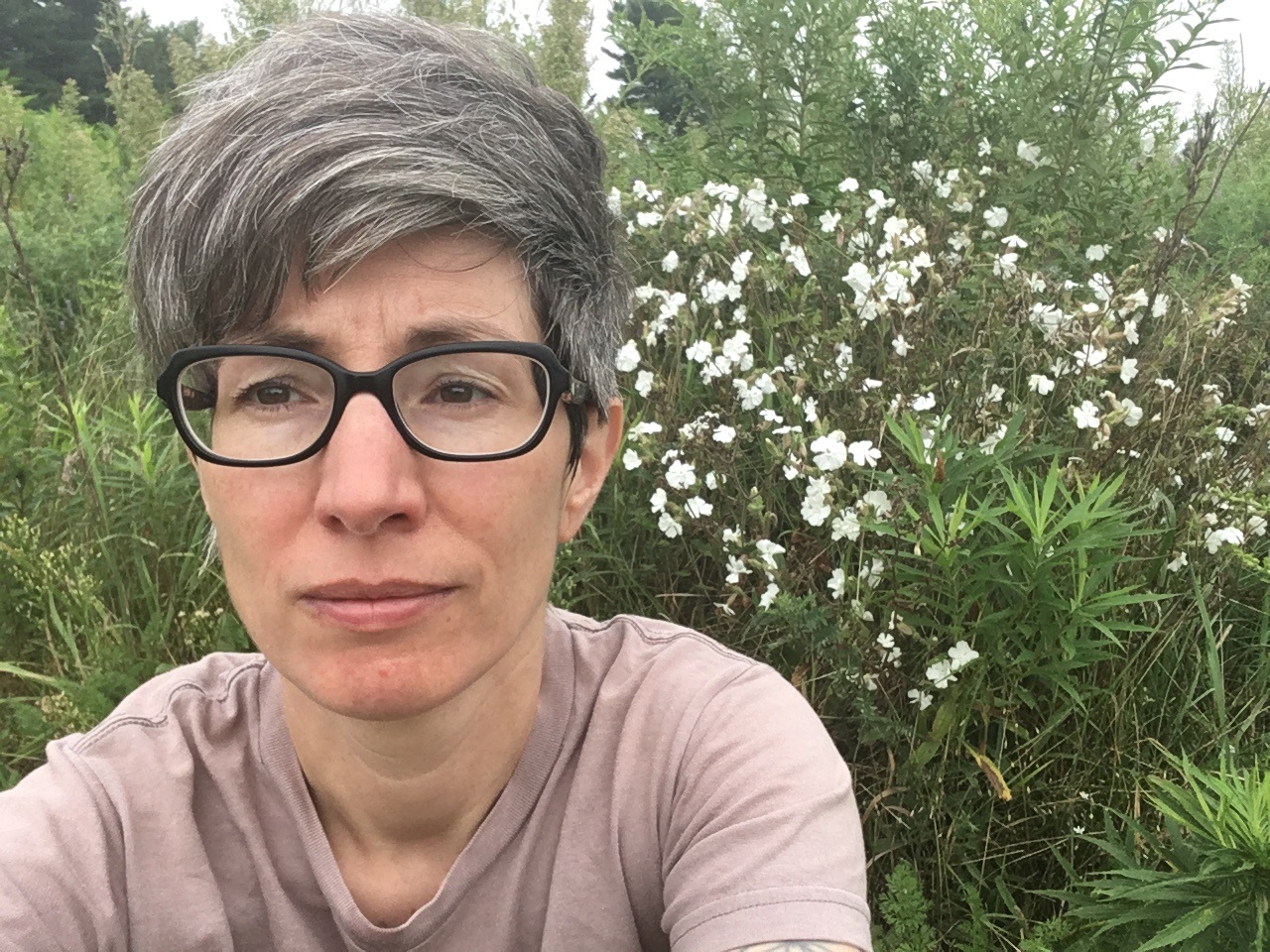
Basma Kavanagh is a poet, visual artist, and letterpress printer who lives and works in Nova Scotia, in Mi’kma’ki. She has published two collections of poetry, Distillō (Gaspereau, 2012) and Niche (Frontenac, 2015), and a book-length poem, Ruba’iyat for the Time of Apricots (Frontenac 2018). 

Link Instagram

Photo by Annie Spratt on Unsplash

Read more

  • Basma Kavanagh
  • Writer Resources
  • Writing Spaces

Post navigation

Finding the Form with Anne Hopkinson
What is Ferrukh Faruqui Reading?

Territorial Acknowledgement

The New Quarterly is based in Waterloo, Ontario, on the traditional territory of the Haudenosaunee, Anishinaabeg, and Neutral Peoples. We acknowledge that this land is part of the Haldimand Tract, the land promised to the Six Nations of the Grand River as part of the Haldimand Proclamation of 1784.

As a literary magazine devoted to storytelling, we recognize that stories have long been a way of knowing, preserving, and sharing in Indigenous cultures. We honour the generations of First Nations, Métis, and Inuit peoples who have cared for these lands and continue to do so. We commit to listening, learning, and amplifying Indigenous voices, and to supporting pathways for truth and reconciliation through the stories we publish.

Facebook-f Instagram Linkedin-in Tiktok X-twitter
  • Privacy Policy
  • Accessibilty

MAGAZINE

  • About
  • Our Team
  • Where to Buy

CONTRIBUTE

  • Submit
  • Volunteer
  • Our Board
  • Donate

CONNECT

  • Contact Us
  • Newsletter

Subscribe to our Newsletter

CONNECT