
Dora Dueck’s Writing Space
By Dora Dueck
Writing space. Oh. My mind wobbles a little, because I see first a long lovely narrative of “rooms of my own” in the past—beginning with a typewriter parked in odd spots, at the side of everything else going on in the household and often alternating with a sewing machine, to the ecstatic happiness of a personal desk in our bedroom, and finally, for decades and through several houses, on to an entire room for myself and my work, each one anchored with a big drawered desk and a succession of computers, and featuring, in addition, views of wall art and photos, and out windows, prairie and sky or a backyard lawn or a tree-lined street.
Now—and this is the wobble—I’m back to the odd spots. My life is different since my husband retired four years ago and we massively downsized and moved from Manitoba to British Columbia to a two-bedroom apartment, to be closer to children and grandchildren. It’s far less square footage than we had for many years and with the two of us generally about, we have to negotiate where we set ourselves down. And after we moved he got the cancer again, so our days pass relatively home-bound.
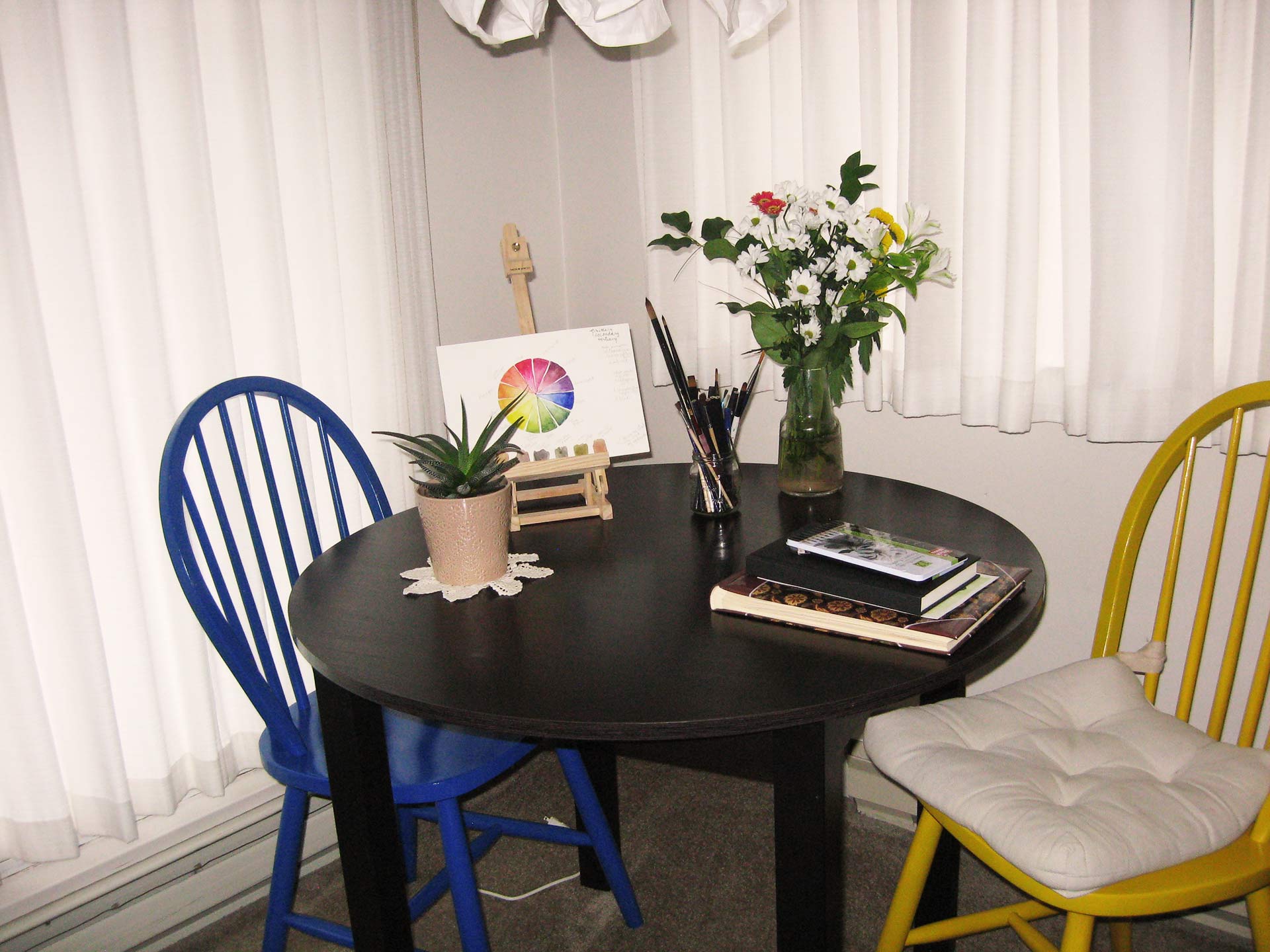
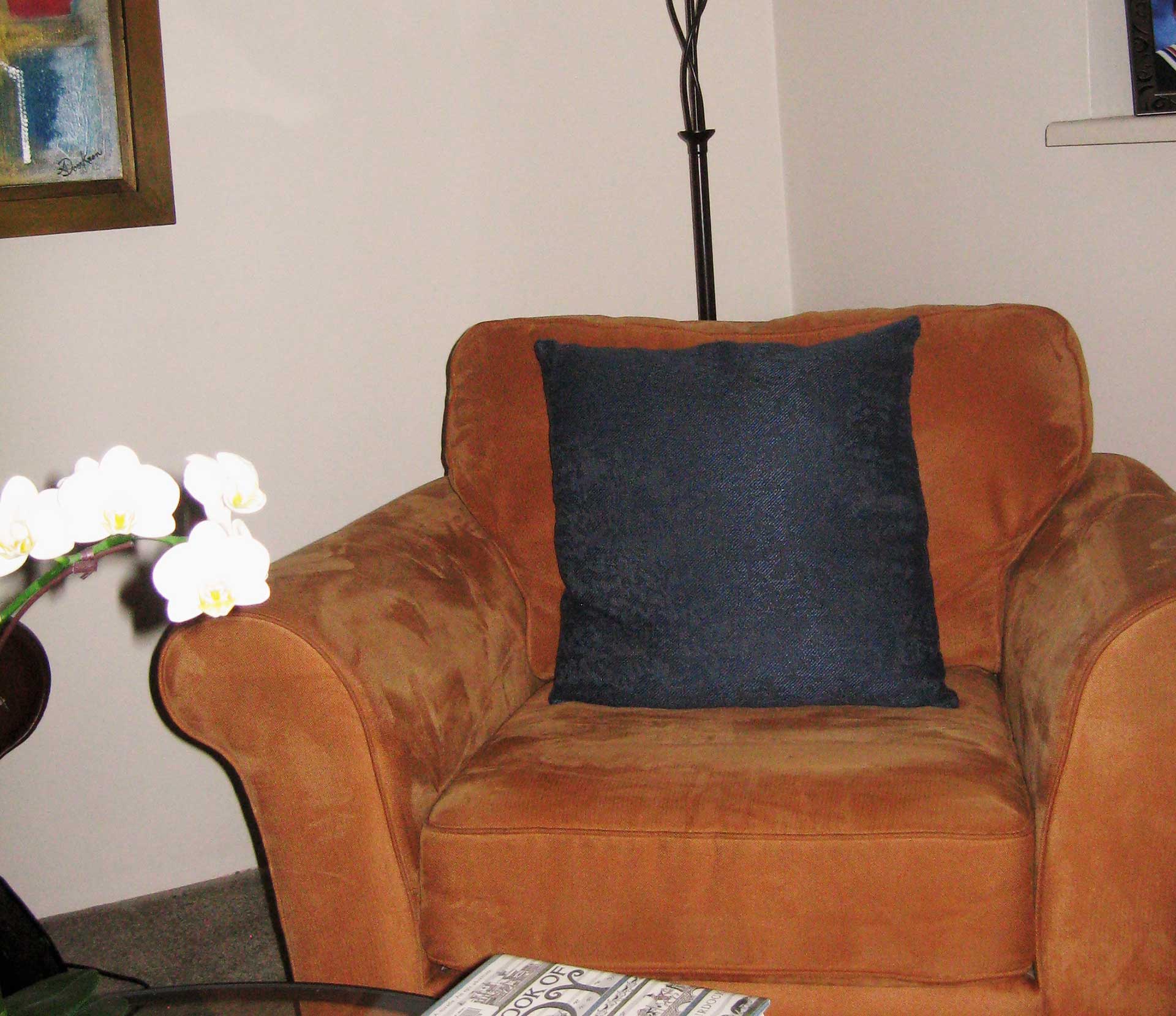
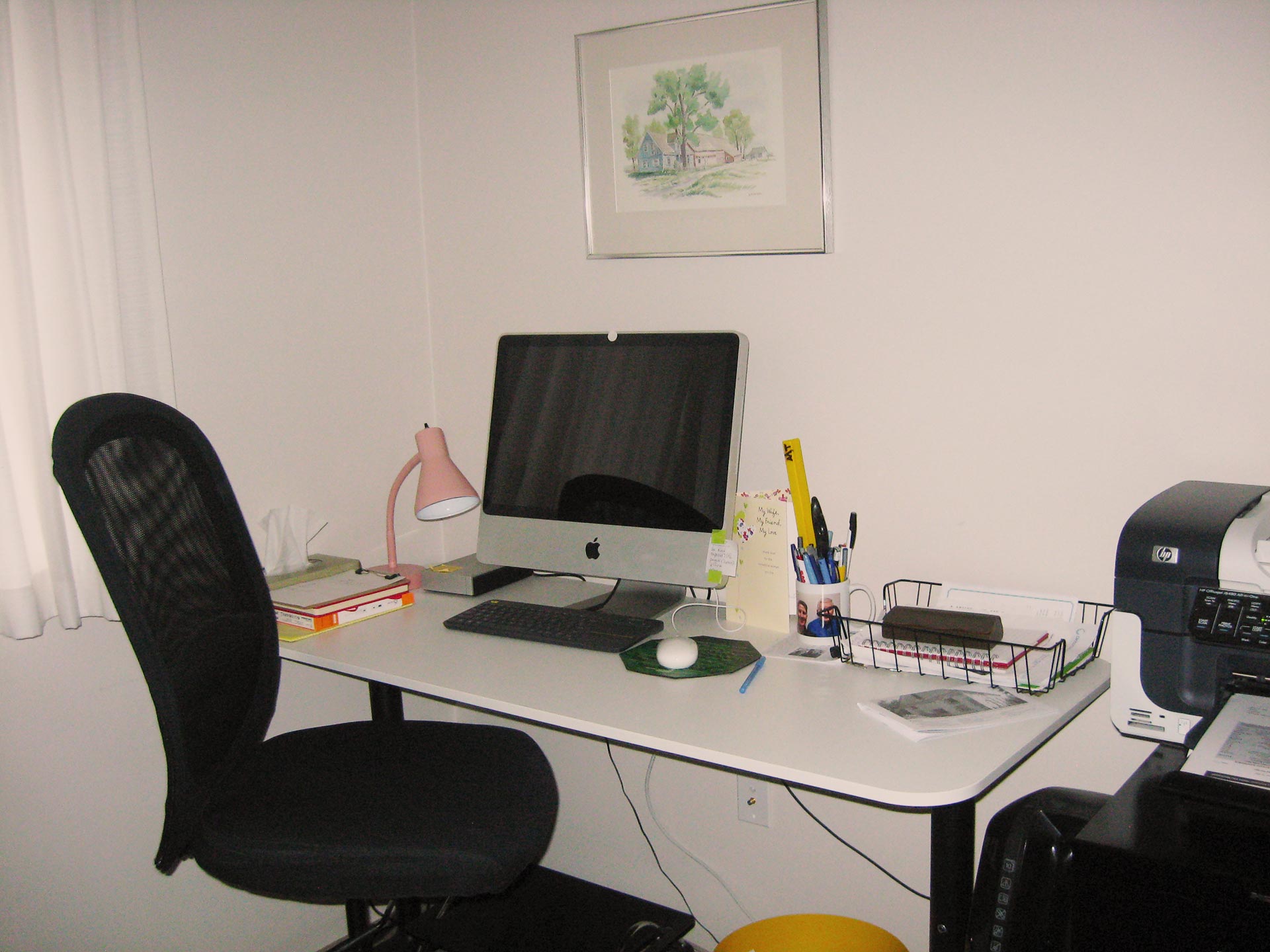
I still have an office of sorts, but it’s actually guest room with a spare bed and store room with the freezer. The desk is simple IKEA, and I work there when I’m feeling particularly professional and able to coax my ancient (in technology terms) desktop computer into another round of hours. I also spend writing time with a laptop in “my” chair, which happens to be the pumpkin-coloured one, facing bookshelves and television and the balcony doors and beyond. Sometimes my laptop and I move to the round black table in the corner of the same room, if it’s not cluttered, that is, with my recent attempts at watercolour. Now and then I write in bed, in my pyjamas, which gets uncomfortable after a while but does accommodate short bursts.
Small and down-sized and flexible is a function of the current stage. And of somewhat reduced ambitions. Writing is the constant, but spaces form a chronology. When I was younger, everything was full and expanding and I required more; the arrangements were like family trips with numerous suitcases. I’m travelling lighter again; a carry-on will do. At 70, it’s good enough.
Dora Dueck’s fourth book of fiction, All That Belongs, was released in the fall of 2019. She lives in Tsawwassen, B.C.
Photographs courtesy of Dora Dueck. Cover photo by Sincerely Media on Unsplash.
Read more