
What’s Veronika Gorlova Reading?
By Veronika Gorlova
For the past few years, I’ve been reading a series of novels called “On the Calculation of Volume” by Solvej Balle. I read the first, second and third one in quick succession last year then had to wait for the fourth instalment to come out (in English) in April. Each book is less than 200 pages and follows a woman named Tara Selter who gets stuck in the 18th of November. Before I get into some broader themes, I want to comment on the month that Balle chose to trap Tara in. There’s something about the month of November that feels true when thinking about being stuck in a time loop. I once wrote a poem about depression describing it in this way: it is always November. I think I might have unintentionally stolen this idea from Ocean Vuong’s poem “Anaphora as Coping Mechanism”, which I had read months before, where the speaker is dealing with the death of a loved one: He dies when you wake / & it’s November forever. There seems to be something particularly isolating about the month of November that Balle is tapping
into as well.
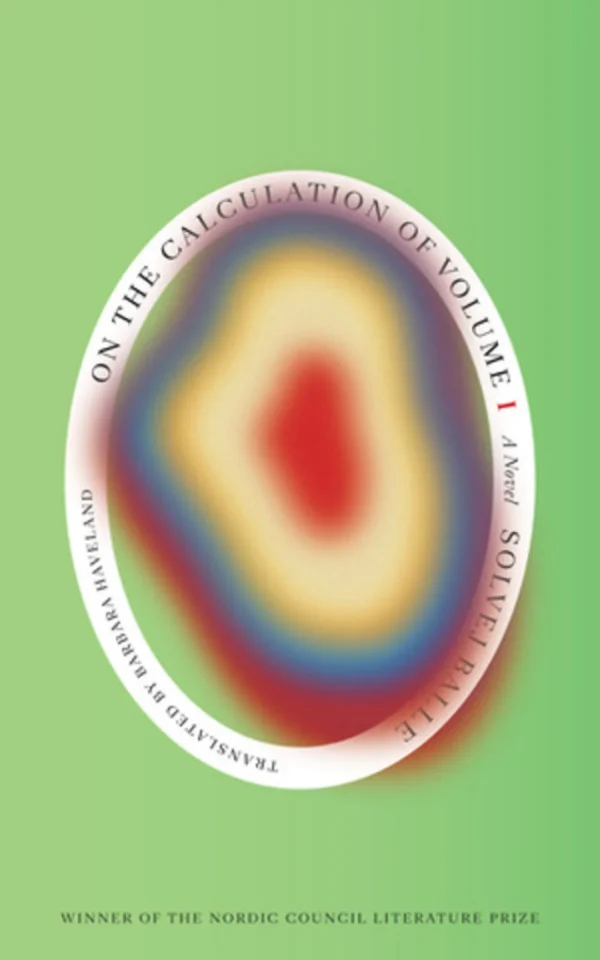
There are so many things that can be said about this series, and I don’t want to give too much away particularly because Balle manages to make each book feel new, but the theme that really resonates with me throughout is that of alienation. In the first novel, Tara experiences the time loop while she’s away on a business trip. She wakes up on what’s supposed to be the 19th of November but quickly realizes that she’s repeating the exact same day as yesterday, and that she’s alone in this experience. The first novel is mostly spent in her home, much of it just listening to her husband move around the house while she hides in a backroom (she’s supposed to be away on a business trip) and trying to figure out how her 18th of November functions. Eventually, she recruits her husband into helping her decipher the time loop but the longer it goes on and the further away she gets from his 18th of November, the more she feels like she can’t bridge the gap between them. It’s a beautiful commentary on how we can grow apart from people that we love despite our best efforts, and Balle hints at the beginning of the book that this gap already existed in their relationship, the time loop just put it into greater focus.
But these books are about so much more than that. I think more broadly, Balle explores the ways in which we can feel completely alienated from society and how we respond to that alienation. If you’ve ever had a loved one die you’ve probably felt unmoored, like your life has come to a halt while the rest of the world is moving on without you. Balle is interested in how we cope with this kind of deep alienation and the ways in which we find our ways back to the world.