Skip to content
logo TNQ
  • Read
    • Dispatches
    • Issues
    • Online Exclusives
    • Under Review
    • Free Archive
      • Poetry
      • Fiction
      • Nonfiction
  • TNQ Presents
    • Wild Writers Literary Festival
    • Writing on the Land: A Wild Writers Retreat
    • The Vestige and TNQ Story
    • Spirit Ink
    • The X-Page Workshop
    • Parallel Homepage
  • Subscribe
    • Print Magazine
    • Digital Edition
    • Free Archive
  • Submit
    • Contests
    • Regular Submissions
  • Donate
  • Shop
    • Where to Buy
  • My Account
  • About TNQ
  • Our Team
  • Contact Us
Login
$0.00 0 Cart

What’s Morgan Dick Reading?

By Morgan Dick

For many years, I considered myself allergic to poetry. Most of the poets I studied in school were eighteenth- and nineteenth-century Englishmen who wrote about beautiful women, so you can see why I thought the form silly and self-important. By my twenties, I’d done my best to avoid reading it. Beyond a few mopey verses composed in seventh grade for an English assignment, I’d never tried to write it. (I still haven’t.)

Around this time, I stopped reading what a syllabus had told to me read and started wandering around the library on my own, pulling the titles that intrigued me or which the staff recommended. My feelings about poetry, like my feelings about reading in general, began to shift. Slowly but surely, I realized that girls wrote poetry, too. And they had quite a lot to say.

“Slowly but surely, I realized that girls wrote poetry, too. And they had quite a lot to say.”

An Alberta poet and novelist I’ve come to admire is Erin Emily Ann Vance. Published by Guernica Editions as part of its First Poets Series, A History of Touch is Vance’s full-length poetry collection. I picked it up because I was in the mood for something folkloric and dark, and the collection hasn’t disappointed.

Vance’s poems bear witness to women throughout history—figures both real and imagined—who found themselves othered due to illness, disability, or independence of mind. She writes about healers, artists, midwives, purported witches, and in one especially striking example, factory workers who experienced phossy jaw, a condition caused by unsafe exposure to the phosphorous in matches, which caused the jaw to rot.

I’ll say this collection isn’t for the faint of heart. The language is visceral, grim, and deeply unsettling. But that’s the whole point of poetry, I’ve learned—to not just read the words but to feel them.

Morgan Dick is a neurodivergent writer living on Treaty 7 territory. Her fiction has appeared in Grain, Geist, CAROUSEL, Cloud Lake Literary, Vagabond City Lit, and The Prairie Journal. Find her at morgandick.com.

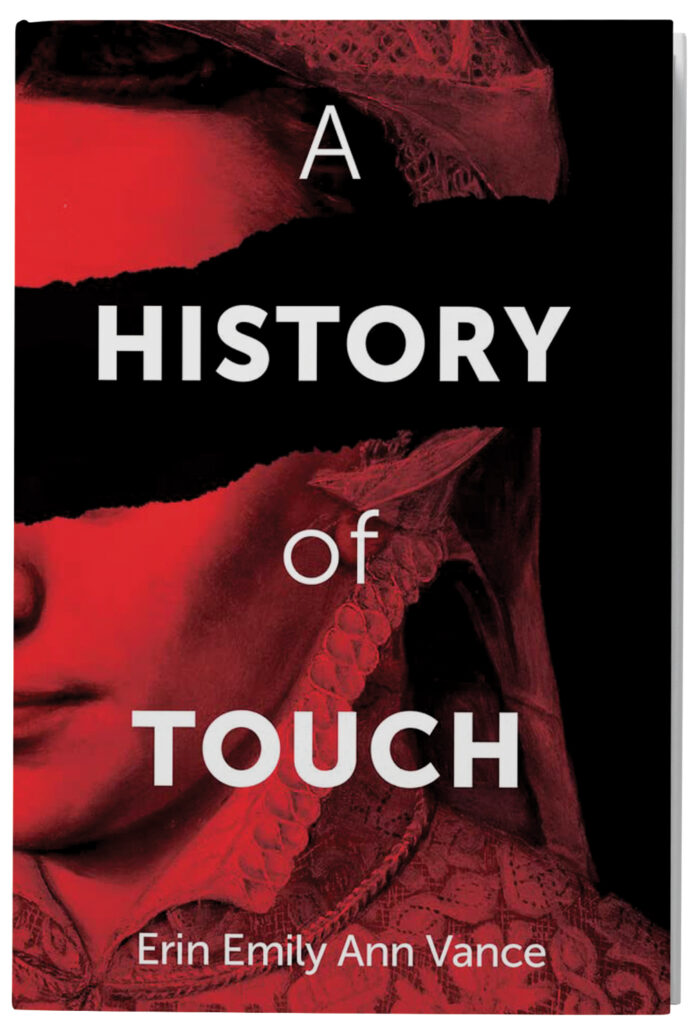
Photo by Nick Fewings on Unsplash

Read more

  • Morgan Dick
  • Who's Reading What
  • Writer Resources

Post navigation

Meraj Zafar’s Writing Space
Finding the Form with Fiona Tinwei Lam

Territorial Acknowledgement

The New Quarterly is based in Waterloo, Ontario, on the traditional territory of the Haudenosaunee, Anishinaabeg, and Neutral Peoples. We acknowledge that this land is part of the Haldimand Tract, the land promised to the Six Nations of the Grand River as part of the Haldimand Proclamation of 1784.

As a literary magazine devoted to storytelling, we recognize that stories have long been a way of knowing, preserving, and sharing in Indigenous cultures. We honour the generations of First Nations, Métis, and Inuit peoples who have cared for these lands and continue to do so. We commit to listening, learning, and amplifying Indigenous voices, and to supporting pathways for truth and reconciliation through the stories we publish.

Facebook-f Instagram Linkedin-in Tiktok X-twitter
  • Privacy Policy
  • Accessibilty

MAGAZINE

  • About
  • Our Team
  • Where to Buy

CONTRIBUTE

  • Submit
  • Volunteer
  • Our Board
  • Donate

CONNECT

  • Contact Us
  • Newsletter

Subscribe to our Newsletter

CONNECT