
Megan Callahan’s Writing Space
By Megan Callahan
I once had a creative writing teacher who said he could write anywhere, as long as he had a window. At the time, I nodded and thought, of course! Who could write without a swatch of sky? A dusty sunbeam or street-side view? It seemed intuitive, somehow, that my creativity would be stunted without these basic elements, and I carried the belief with me for years. I sought out skylights, glass doors, and second-floor balconies. I wrote stories on park benches and sun-kissed stoops. But as I got older, and much busier, I found myself writing in poorly lit, sterile, underground places: in grim basement offices, on crowded metro platforms. I’d get home, read the bones of first drafts typed in bursts on my phone, and wonder where they’d come from.
I’ve learned that my best beginnings come together when my mind is restless and roaming. For something to happen, a certain amount of discomfort is required. Multiple times a day, I thumb notes on my phone: lists and scenes, sometimes chunky blocks of description. A snippet of dialogue overheard on the street. An idea sprung from a memory that bubbles up during a dull meeting. I’ve read that boredom and mind-wandering can move us into a state of daydream, where that creative spark lives, and this has definitely been my experience.
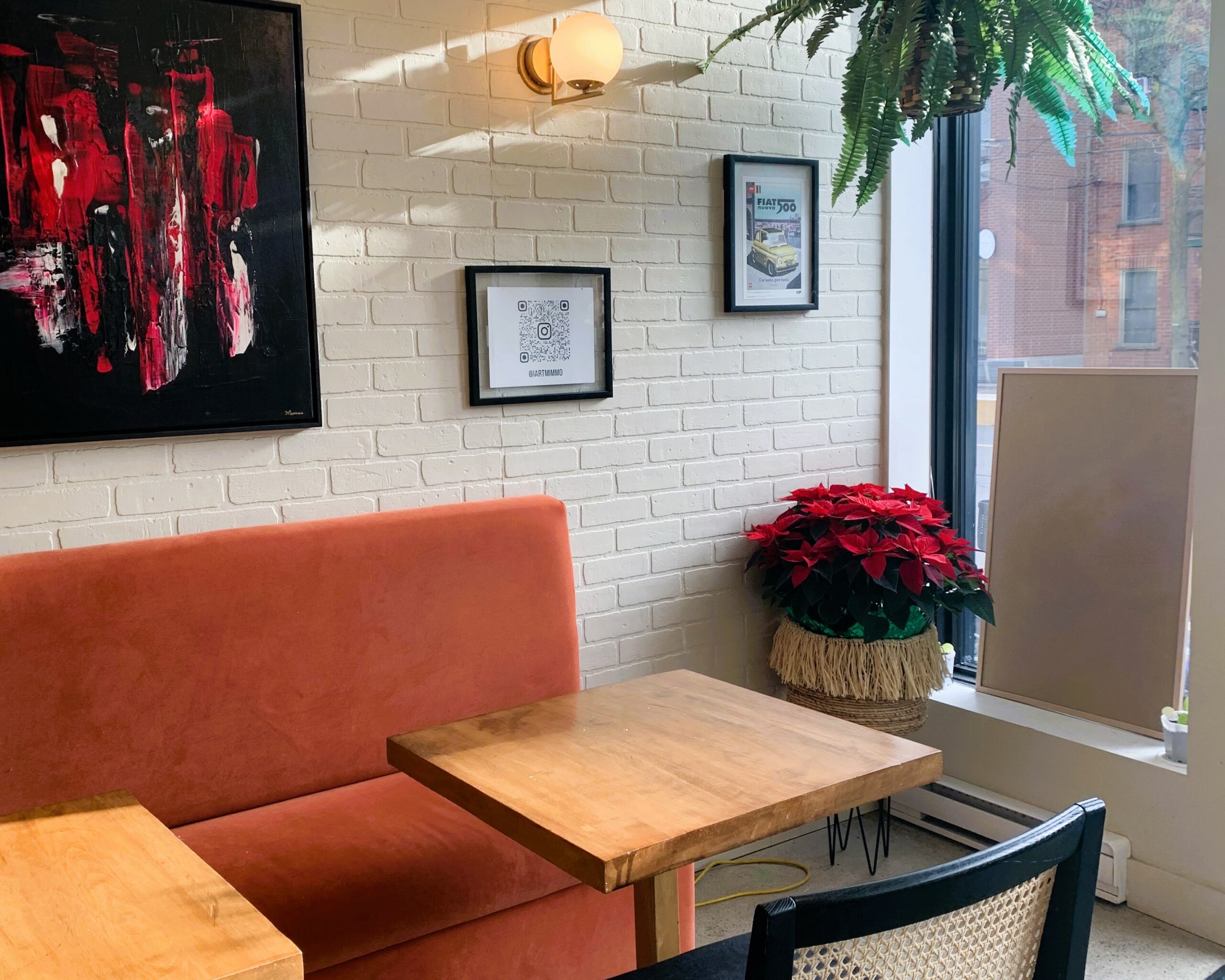
But when it comes to building something sturdy from those fragile parts, it would be a lie to say that I can write anywhere. When my Notes app is packed and I glimpse the outline of a story, I grab my laptop and write my first, exciting draft at the café around the corner. Finding quiet moments at home has been tricky since my daughter was born, so Florence Café has become a haven. The baristas are warm and friendly, especially with those of us deemed Regulars. And the windows? They’re large and southeast facing, which means early morning light and a clear view of passersby. I’m also an eavesdropper (aren’t all fiction writers?) and cafés, with their close tables and sleepy conversation, are ideal for that.
For me, editing—which, I once heard a novelist say, is the real work—is the only part of writing that tends to happen in my apartment. The cozy home office I share with my husband, who has against all odds greenified the space with tropical vines and Californian succulents, is where I do my 9-to-5 job. I spend 35 hours a week in my ergonomic chair, at my perfectly adjusted desk, with a lovely balcony door on my left. In this space, which I associate with calm and focus, is where I hunker down, on lunch breaks or after my daughter is asleep, to rewrite my first drafts. I analyze sentence structures and obsess over word choices. I write second and third, and often fourth and fifth drafts. I absolutely love and cherish my little office. But I’ve also come to appreciate and even seek out those grim, uncomfortable, windowless spaces.

Megan Callahan (she/her) is a writer, book reviewer, and French-to-English translator. Her stories have appeared in various American and Canadian literary magazines, such as Fractured Lit, Carve, FreeFall, Nashville Review, PRISM international, and Room, as well as in several anthologies, including 2021 Best Canadian Stories. She lives in Tiohtià:ke/Montréal with her husband and daughter.